Black, white and gray – a lens on nature


photo by Stephen Petegorsky

NORTHAMPTON — The Meadows are one of my favorite places to walk, daydream, write, and watch nature change in its numberless daily ways. A swath of agricultural land between Northampton’s downtown and the Connecticut River, they’re within easy walking distance of my home.

Wandering the Meadows, I regularly see red-tailed hawks, bald eagles, and northern harriers – long-winged predators that swing to and fro like giant boomerangs over the long grasses. There, I like to sit on the root system of a huge tree that juts from the riverbank, and watch small boats chug slowly past the Holyoke Range.

I was pleased to discover a new book of photographs of my walking haunts: “The Meadows,” by Stephen Petegorsky, available at Broadside Books… In Petegorsky’s images the Meadows become alien, fey, wild.

Read the rest of the review at the Daily Hampshire Gazette

Wrinkled flower

A world overheating

NORTHAMPTON — About a year ago, I saw three deer running across the Connecticut River. They weren’t walking on water: the river had frozen, thick enough to support their lightly tripping hooves. Last winter, Bostonians got so much snow they called it the Snowpocalypse.

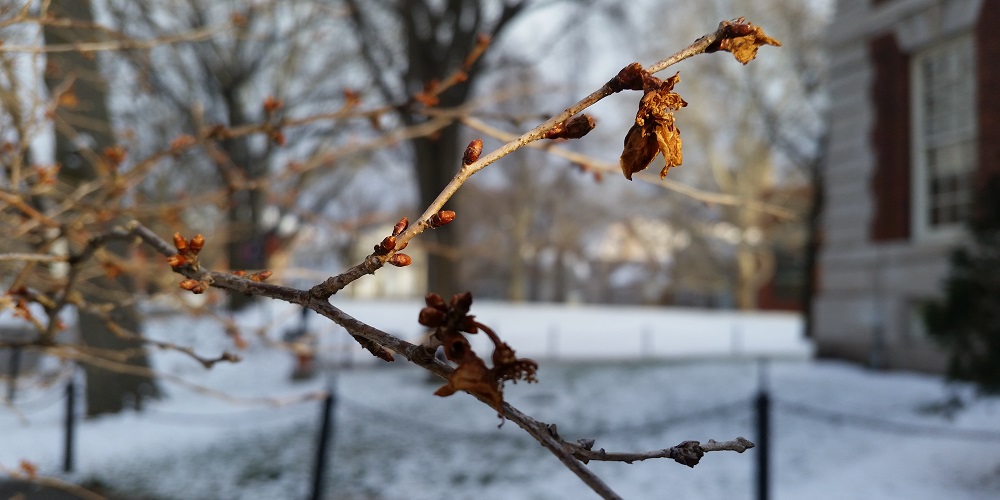
This December, I saw a deer again, but it stood on the Connecticut’s bank, its head dipped, drinking. Three kayakers paddled slowly towards it. I stood with my bicycle on the bike trail, clad only in a sweater. Outside my office, that morning, I’d seen a cherry tree putting out hesitant, puzzled white flowers – flowers that wilted and turned a wrinkled brown with the New Year’s cold snap that finally plunged us into the winter weather we’d been expecting.

We live in New England. Things change here. “If you don’t like the weather in New England,” Mark Twain wrote, “just wait a few minutes.”

I tell my students at Smith College that I’m not surprised that many people struggle to believe in climate change. But everyone knows flowers in late December are, to put it mildly, not normal…

Read more at the Daily Hampshire Gazette

*

I’ve also got an article out this week in Smith College’s research magazine on research into brain cancer, autism, depression, sleep disorders and other ailments using the versatile zebrafish:

Zebrafish: The Rising Superstars of Research – Insight Magazine

*

Photo above: A cherry blossom at Smith College withers during the January cold snap after flowering during December’s weird warmth.

A spear in the darkness

Reading back through an old notebook, I rediscovered some fine insights by fiction writer Tim Weed, originally shared during a talk he gave at the yearly meeting of the NE Society of Children’s Book Writers and Illustrators. He spoke of creating stories that will build lingering meaning for readers.

Weed started by playing two pieces of music, one by Bach, one by John Cage. He asked us which was easiest to listen to. A majority of us preferred the Bach, a piece described by Weed as “more patterned” – a pattern, but with variations within the pattern – “like a fire – you can watch it for hours.”

He then described how literary patterns often function via external and internal symbols or image systems. External symbols mean something to humanity at large, while internal symbols have meaning only within the story.

Weed encouraged us to “lace something through your story that will have a subliminal effect on the subconscious of your reader.” This, he said, is “normally something you add in revision” to “add a resonance.”

“Part of the revision process is re-inhabiting scenes to bring out that resonance that is already subconsciously there,” he said.

It reminded me of a comment by fantasy writer John Crowley. To revise a story, Crowley said, one must “go back” to the frame of mind, the psychological zone where the story came from. “And you can go back,” Crowley assured us.

Weed went on to explain that symbols or image systems provide a “hidden sense of meaning that can appeal to the reader’s buried primal sense of order.”

To achieve this sense of order, one can, as a writer, “tap into your memories of the landscapes of your childhood. Look for surprising or interesting imagery or patterns of imagery.”

He ended, quite beautifully, on a metaphor for the act of creating story.

“We need to throw a spear out into the darkness, then follow that spear with the intellect – bringing our analytical mind to bear, sometimes for years, to create this machine in the mind of the reader.”
Unexpected Encounters

IMG_20150629_130621126_HDR

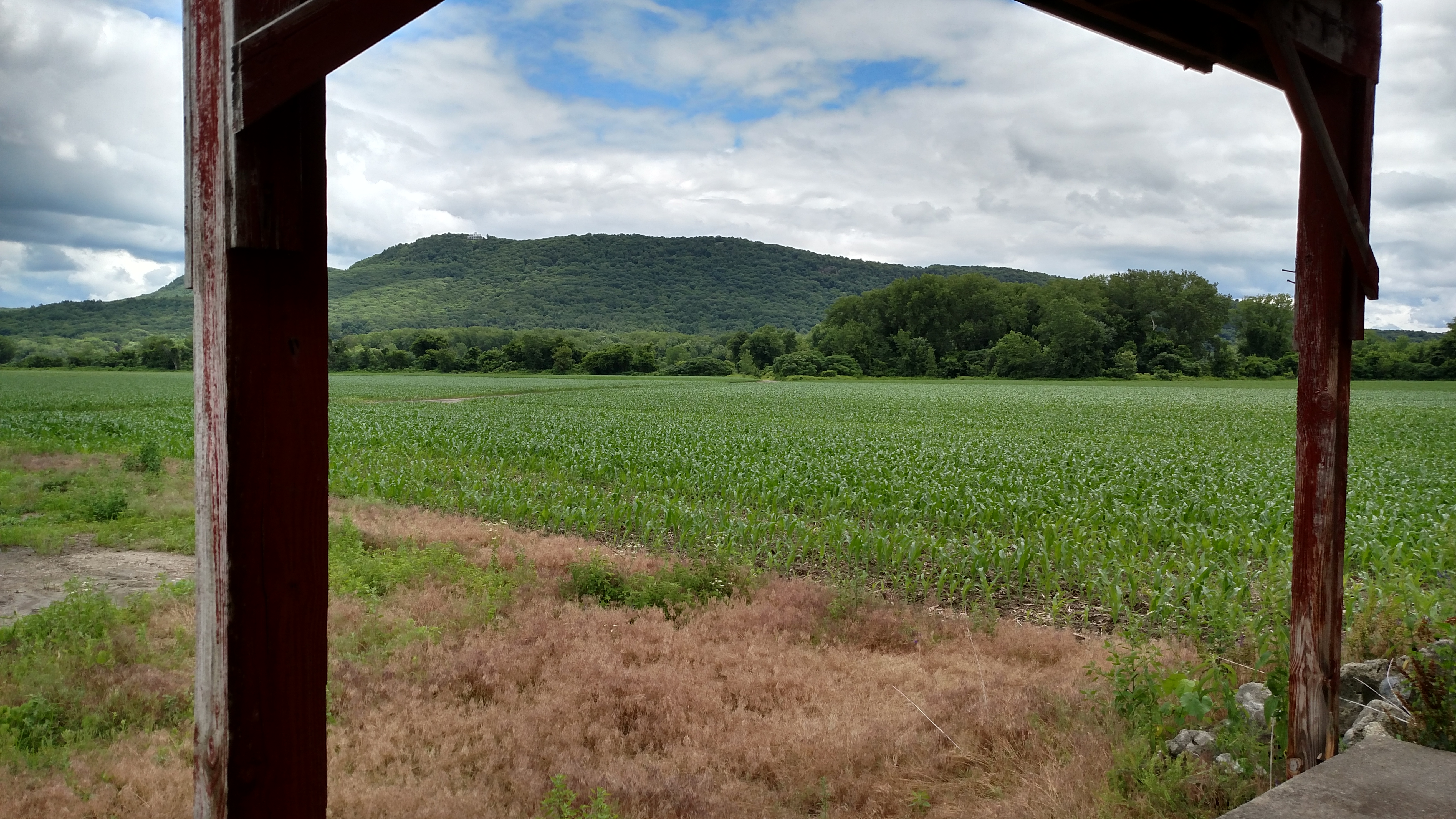
Today the corn is new, no higher than my knee, and at this height it has a special color: luminous green under the overcast sky. The clouds are thick and dark, like a stew. For some, this place might seem always the same: the corn growing, the looming mountain, the lone trees far off across the fields still and silent, punctuating the view. But for me there is always something to see.

Across the fields I see clouds of red-wing blackbirds tumbling over the new growth, and their cries echo, traveling far over this flat landscape: the “chack-chack” of their short flight call, the “ockaleeeee” of their annunciatory mating song from time to time interrupting the air. Puddles from yesterday’s rain have made an obstacle course of my usual dirt road to the river.

Read the essay at The Common Online

Snow Falling

snowfalling_origimage courtesy of The Common Online

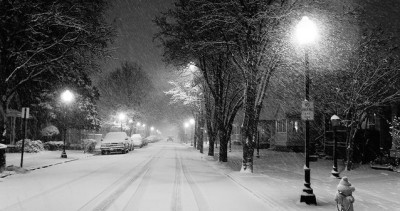
We were tipsy and in a good mood, Paul and I, coming home from our favorite bar in the whirlings of this season’s first “historic snowstorm,” when I noticed the figure floundering in the snow.

He was a dark clot of winter coat and baggy pants, on his knees, fumbling with a long rod. I peered at him.

“Is he ok?” I said. “Oh—maybe he’s just fitting a snow shovel back together.” Our steps brought us closer. “Wait, that’s a cane.”

Read the essay at the Common Online

Immune system in a computer

I have an article out in Science News for Students this week, on the immune system, and how computers are allowing us to create simulated immune-cell interactions that mimic the human body and healing:

Virtual Wounds: Computers probe healing

It’s written for young people age 8 to 18.


When the body needs to deliver immune cells to an injury, new blood vessels form. Here, an agent-based model imitates that. It shows what happens when mouse eye tissue (on left) gets blood vessels from developing eye tissue (on right). Image credit: Joseph Walpole, University of Virginia

Collecting Plants

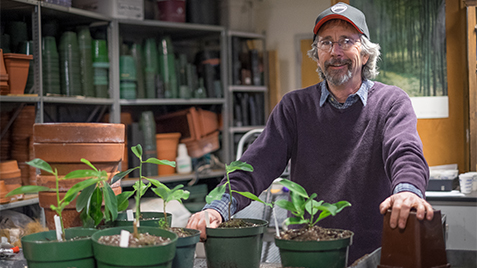
I have a profile out today in Smith College’s Insight magazine, on Smith College Lyman Conservatory manager Rob Nicholson. It describes his adventures in plant-collecting expeditions around the globe:

An Aztec curse seemed like a minor obstacle as Rob Nicholson, manager for the Lyman Conservatory of the Botanic Garden of Smith College, climbed a monkey-hand tree in Oaxaca, Mexico, to gather plant samples. But then he fell out of the tree. …. Read on for more stories from the collecting trips that have taken Nicholson all over the world.

http://www.smith.edu/insight/stories/nicholson.php


Image credit: Smith College Insight magazine

photo by Paul Ickovic

Gorgeous Infidelities

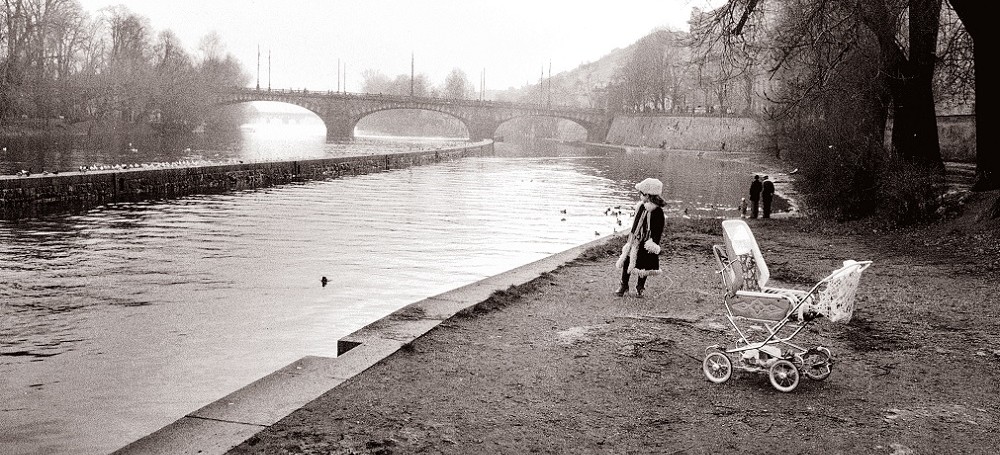
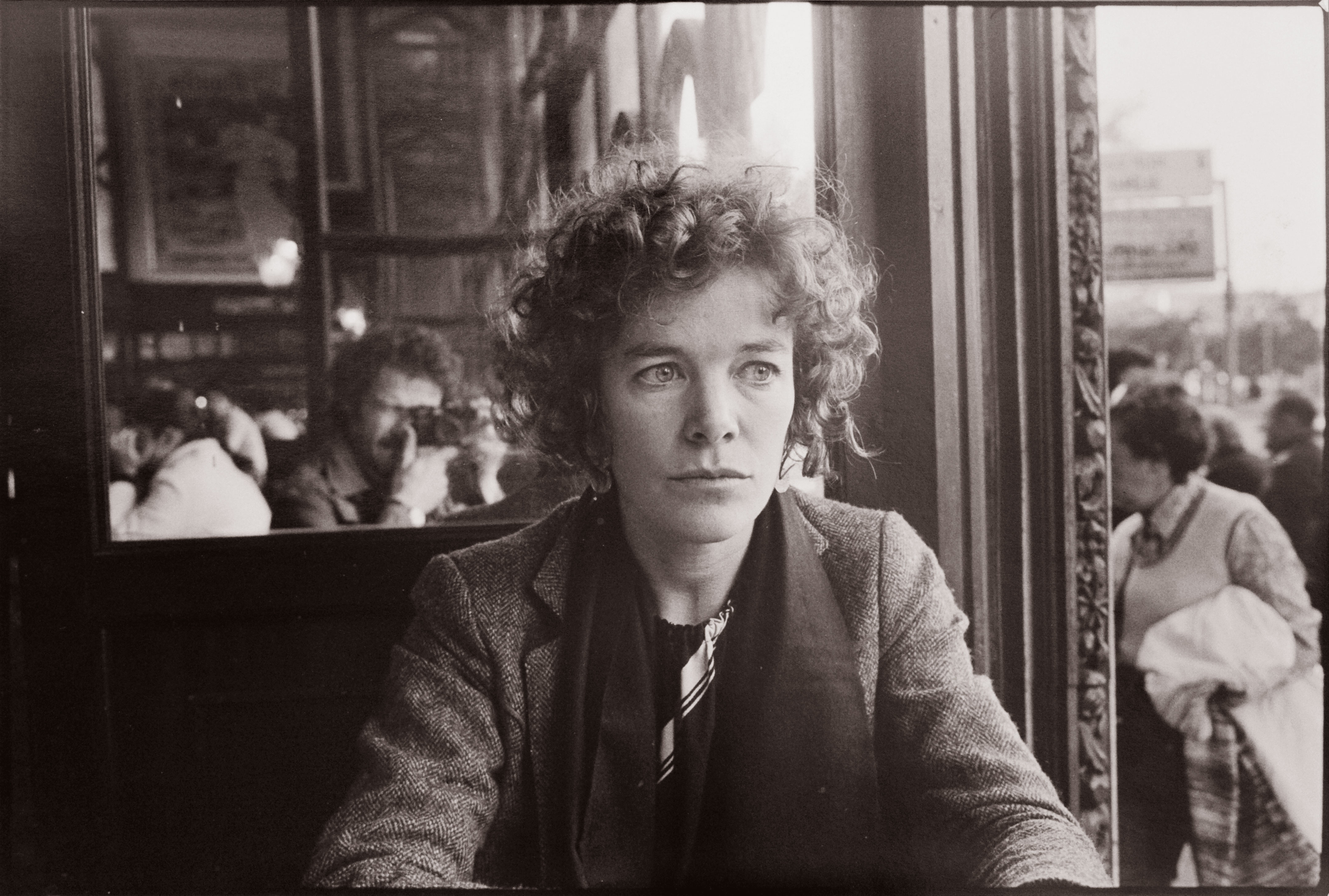
My first book of poetry is coming out this week! It’s an art book in collaboration with photographer Paul Ickovic, pairing my poetry with his photographs, including previously unpublished pictures. It’s titled Gorgeous Infidelities. The poems match the sense of urban and personal dislocation and storytelling imagery of Mr. Ickovic’s photography, most often focusing on the link between the natural and the personal in context of social or environmental threat.

It’s an honor to work with Paul Ickovic, whose photography is housed in many museums nationally and internationally, including the Museum of Modern Art, New York; Bibliothèque Nationale, Paris; National Gallery, Prague; Minneapolis Institute of Art; Museum of Fine Arts, Boston; International Center for Photography, New York; as well as many prestigious private collections. He has published four books, collaborating on two with playwright David Mamet and one with former president of Czechoslovakia and playwright Vaclav Havel. The Smithsonian has begun archiving his work.

This Wednesday, Dec. 10 at 7 pm, I’ll be giving a reading and presentation at the Smith College Poetry Center to accompany the launch, which will be free and open to the public.

You can buy the book at Broadside Bookshop in Northampton, MA.

Apiary

My whole soul without you is pure fatigue.
The hours pass like honey, slow and gold,
A world poured into each drop:
A world of my thwarted imagining.
I build of my own spit mixed with silk:
The poured grains of pollen, sons of the petal;
The thin milk of the flowers.
I chew it like leather. I make it soft,
Full of the flexibility of potential:
These even, mathematical white walls,
These wells of sweetness, these bitter children,
This afterbirth of my labors, this invented castle.

Ickovic_Book__70

(photos by Paul Ickovic)