Dusk at MacLeish

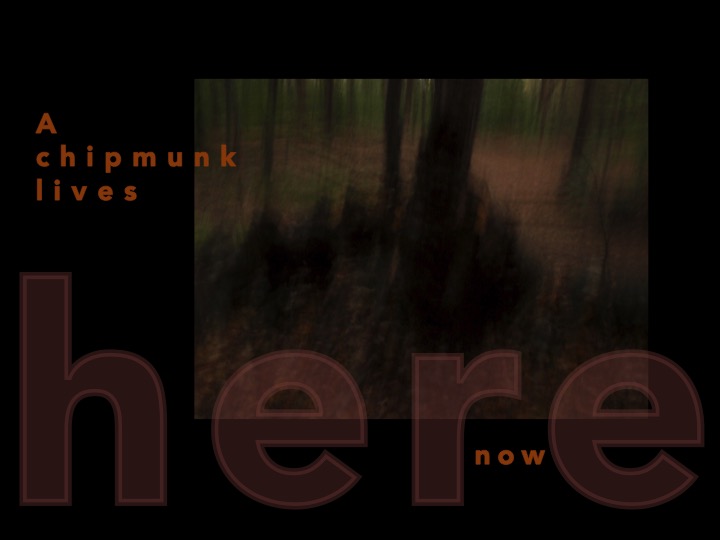
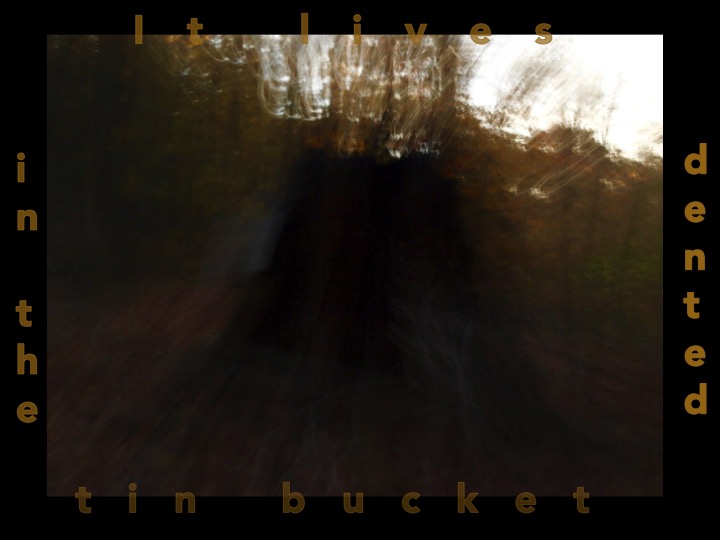
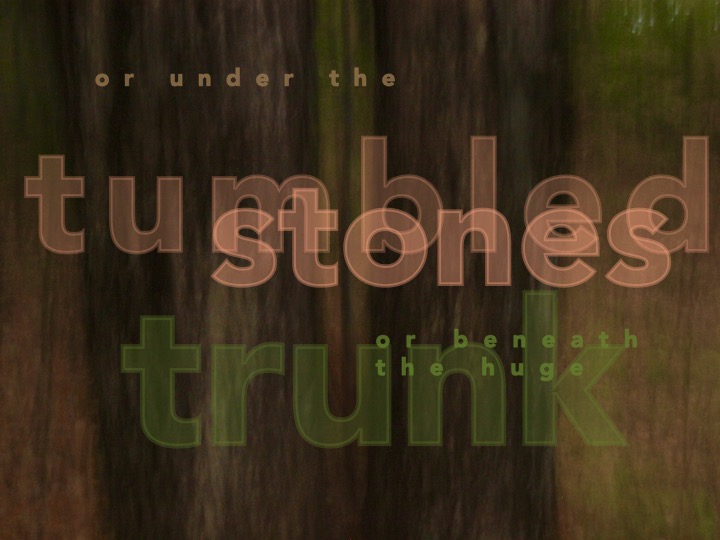
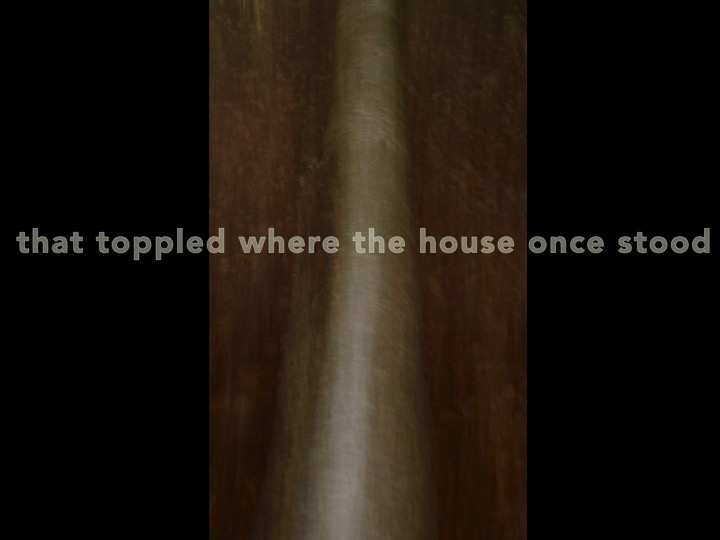
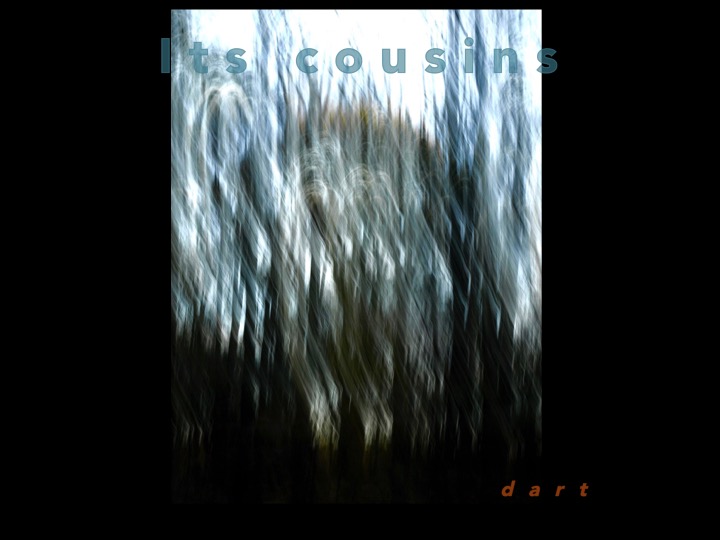
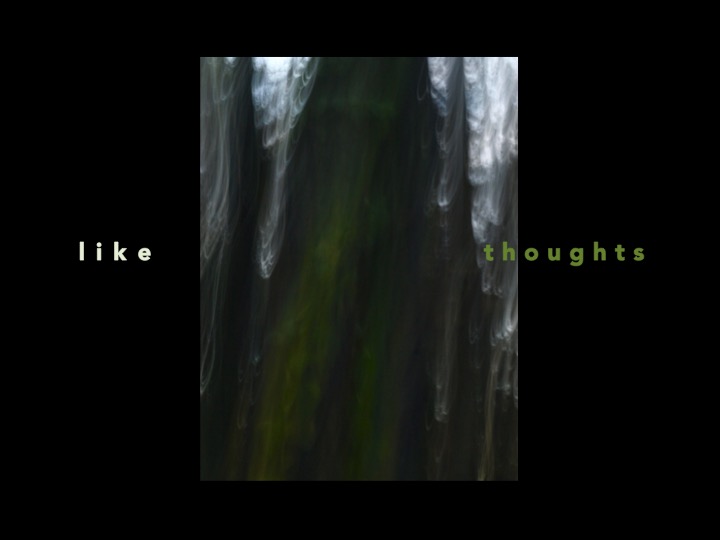
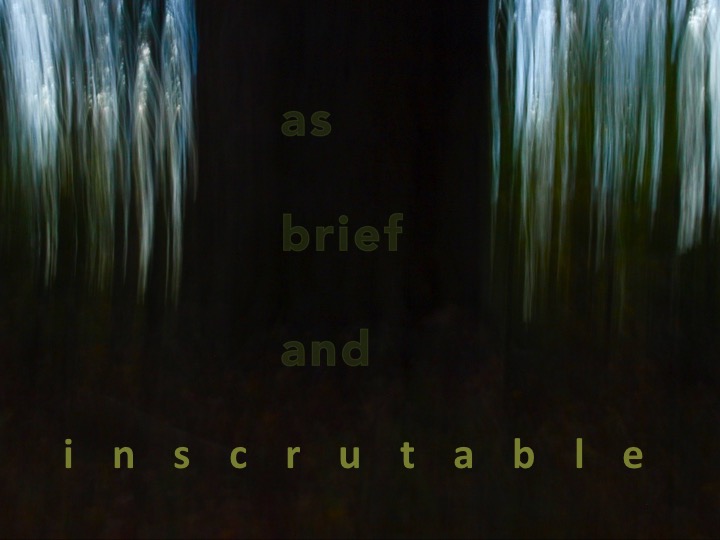
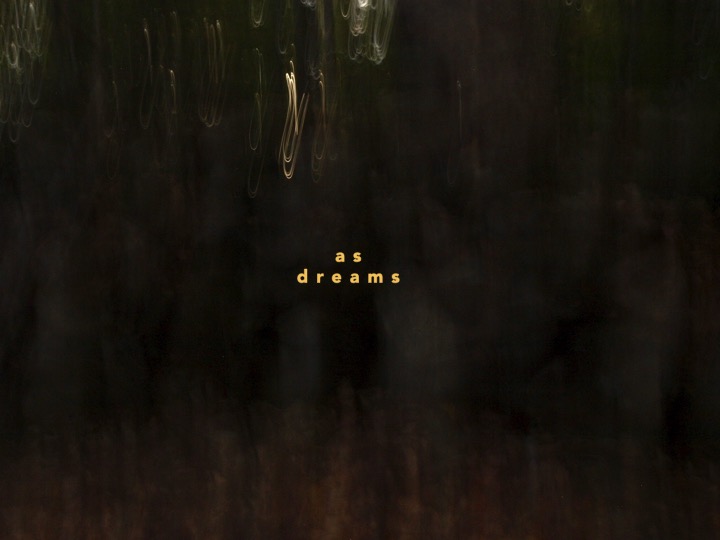
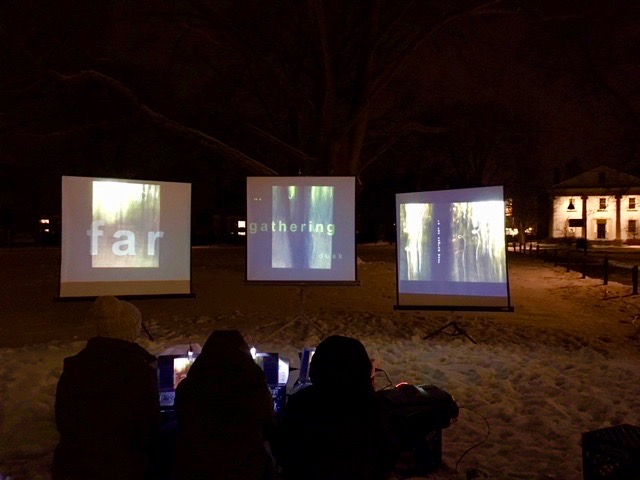
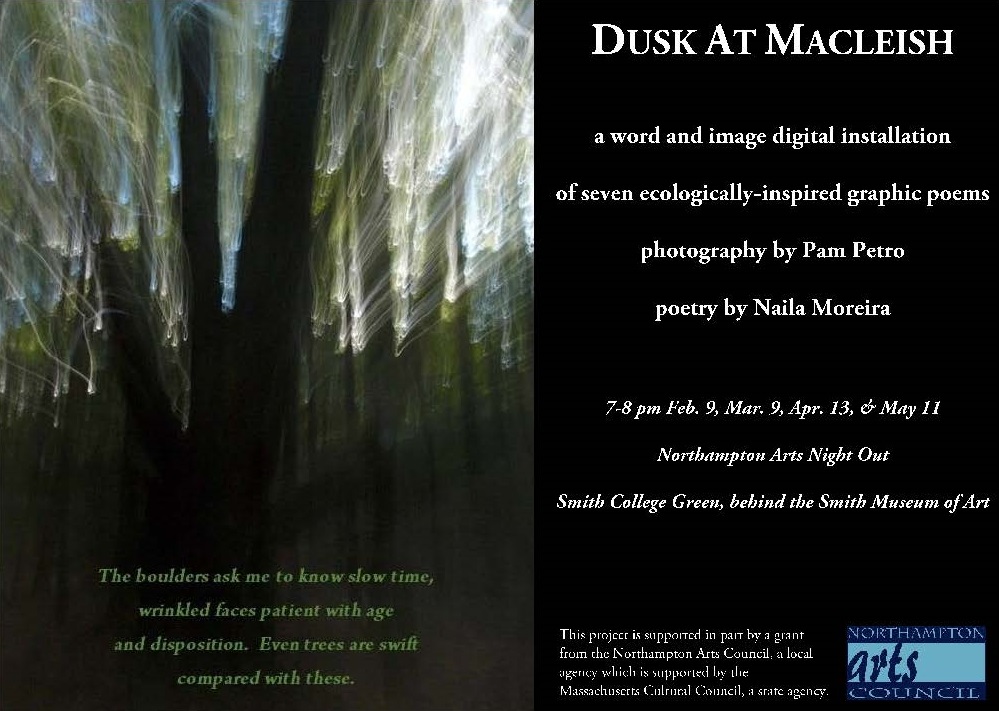
Dusk At MacLeish is a digital installation of ecologically inspired “graphic poems” at Smith College, a collaborative project pairing my poetry with the photograpy of Pamela Petro.

NOTE: The April and May showings will take place at 8 pm to accommodate the changing light.

Dusk at Macleish flyer

The poems and photos reflect on the forest landscape at the MacLeish Field Station in Whately, Masssachusetts, at dusk – its betweenness, liminality and fragility.

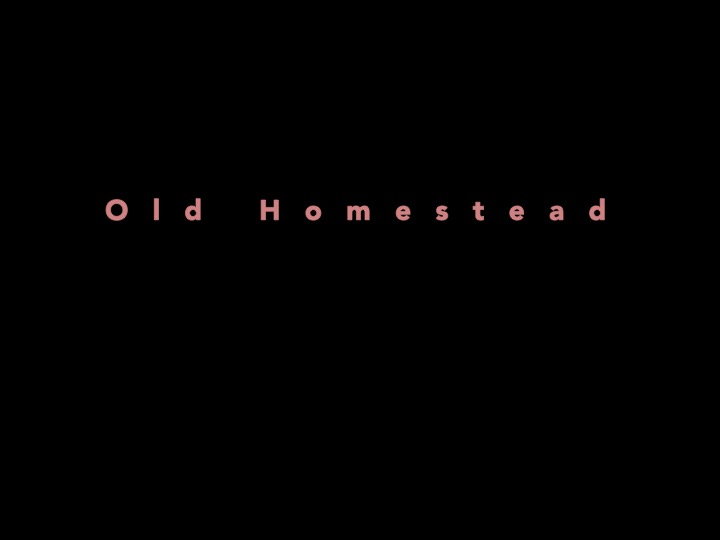
Below, one of the graphic poems, Old Homestead. Click for a slideshow.

The installation in progress:

Feb install 1

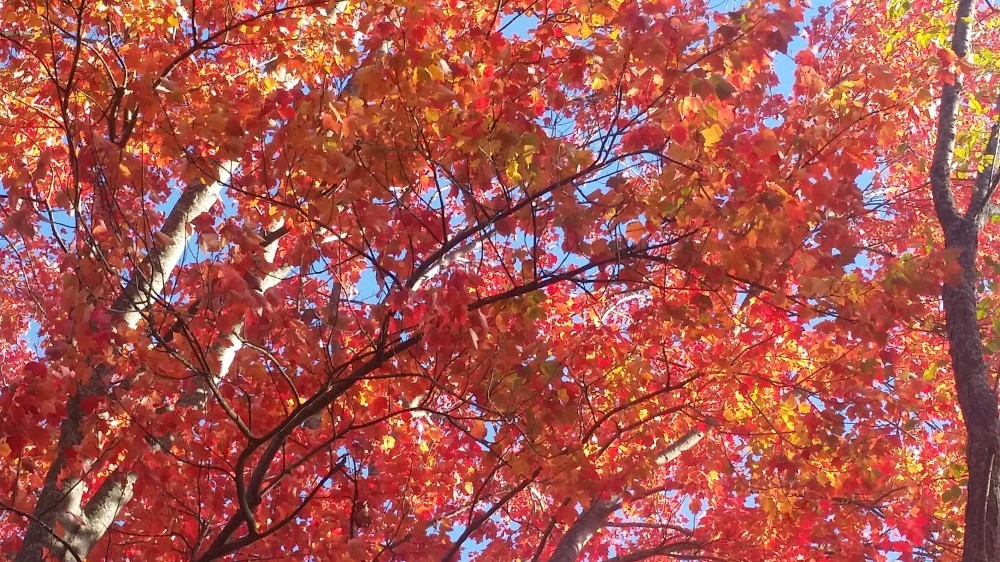
Sugar maples’ uncertain future

As the sugar and red maples finally turn from green to shades of red, peach, orange and yellow here where I sit writing beside the river, it feels like a good time to share my fears for them as New England’s loved and iconic tree in this new ecological future we are both living and creating.

From where I sit, I see a crimson-peach sapling reflected in the pool above the dam, rippled by wind, trembling there in watery mists of impermanence.

A Paean to the Dwindling Maple – Daily Hampshire Gazette

NEPR Interview – Water Street

This summer, I was interviewed about my chapbook Water Street by New England Public Radio’s Karen Brown for her summer literary series.

Summer Fiction: ‘Water Street’ by Naila Moreira

Naila Moreira is a science and environmental journalist who also writes poems. Her new book of poetry, “Water Street,” is immersed in the natural world. She wrote it while living alone in a farmhouse apartment on the Mill River in Leeds, Massachusetts.

Water Street

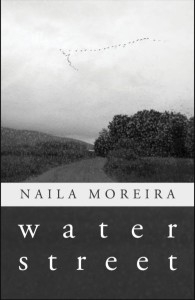
I have a new chapbook of poems coming out from Finishing Line Press. Very exciting!

The collection is called Water Street and explores the tension between freedom and domesticity. I spoke more about the book in this interview.

Of the book, poet Doug Anderson, author of The Moon Reflected Fire, Horse Medicine and other books, said

Naila Moreira is a natural born pantheist. Her day job is writing articles on sustainability of the environment and her poetry is reflexively in love with the earth. The health and sickness of our souls is held tenderly in this lover’s touch. There is no digging out of meaning: it is there if we are able to see it: our “high journeys” will take us “Pole to pole, senseless and invincible, great arcs, like the travelings of the stars.” A fine book with more love than pain and pain held lovingly.

The collection will be out in March, and you can preorder it by clicking here or on the cover image above.

A few sample poems: Frogs, Tractatus, and Lines from Base Camp. The beautiful cover image is by photographer Stephen Petegorsky.

*

Update: Poet Deborah Gorlin also has graciously given a thoughtful review:

In these urgently engaged poems, the natural world serves as witness and accomplice, muse and mirror, companion and liberator. Hearth and home chafe against wildness, habitats of freedom and promise and untrammeled exploration. Domesticity and desire duke it out in the poet’s quest for profound experiences nothing short of cosmic. By the end of the book, the drama calms, and opposites reconcile, as the poet puts her faith in the instinctive wisdom, mystery and contradictions of the heart, “a dark water that shines.”
Winter Notebook

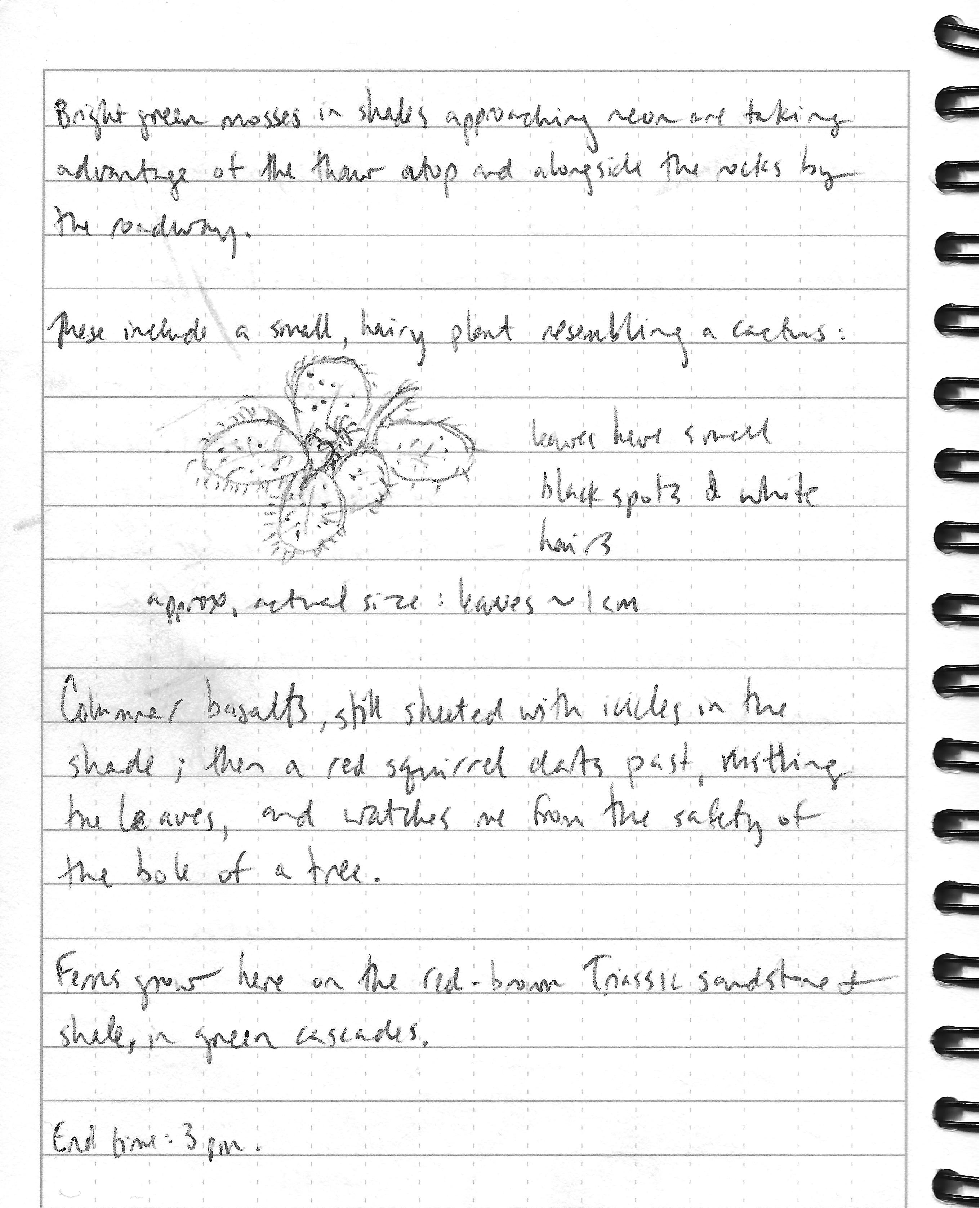
There’s something special about seeking out nature in the unforgiving seasons. In memory of winter, now that spring has at last stolen over the landscape, I thought I’d share this nature notebook entry from the last days of December.

decnotebookpg1

The mosses were bright green in the brief melt, taking advantage of warming.

succulentplant

Among them I found this strange, small plant, described below:

decnotebookpg2

At three p.m. it was time to hike home.

forestpath