Gorgeous Infidelities
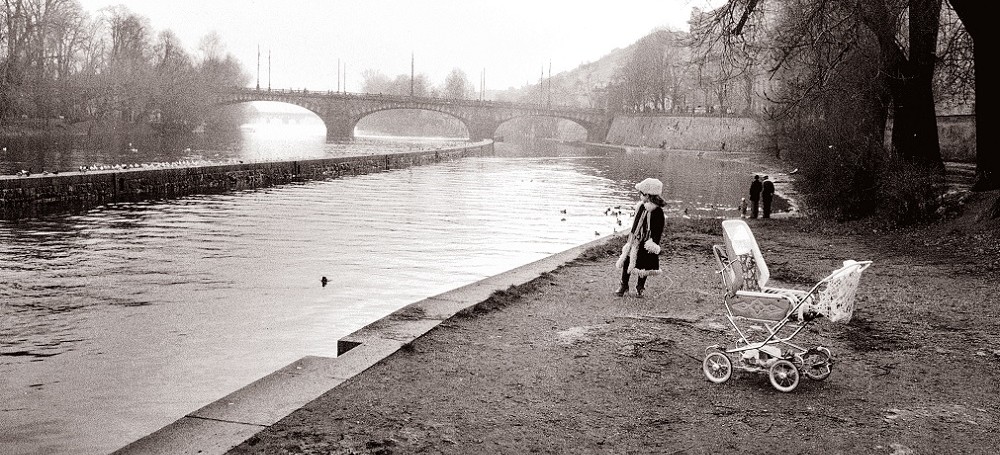
My first book of poetry is coming out this week! It’s an art book in collaboration with photographer Paul Ickovic, pairing my poetry with his photographs, including previously unpublished pictures. It’s titled Gorgeous Infidelities. The poems match the sense of urban and personal dislocation and storytelling imagery of Mr. Ickovic’s photography, most often focusing on the link between the natural and the personal in context of social or environmental threat.
It’s an honor to work with Paul Ickovic, whose photography is housed in many museums nationally and internationally, including the Museum of Modern Art, New York; Bibliothèque Nationale, Paris; National Gallery, Prague; Minneapolis Institute of Art; Museum of Fine Arts, Boston; International Center for Photography, New York; as well as many prestigious private collections. He has published four books, collaborating on two with playwright David Mamet and one with former president of Czechoslovakia and playwright Vaclav Havel. The Smithsonian has begun archiving his work.
This Wednesday, Dec. 10 at 7 pm, I’ll be giving a reading and presentation at the Smith College Poetry Center to accompany the launch, which will be free and open to the public.
You can buy the book at Broadside Bookshop in Northampton, MA.
My whole soul without you is pure fatigue.
The hours pass like honey, slow and gold,
A world poured into each drop:
A world of my thwarted imagining.
I build of my own spit mixed with silk:
The poured grains of pollen, sons of the petal;
The thin milk of the flowers.
I chew it like leather. I make it soft,
Full of the flexibility of potential:
These even, mathematical white walls,
These wells of sweetness, these bitter children,
This afterbirth of my labors, this invented castle.
Hope
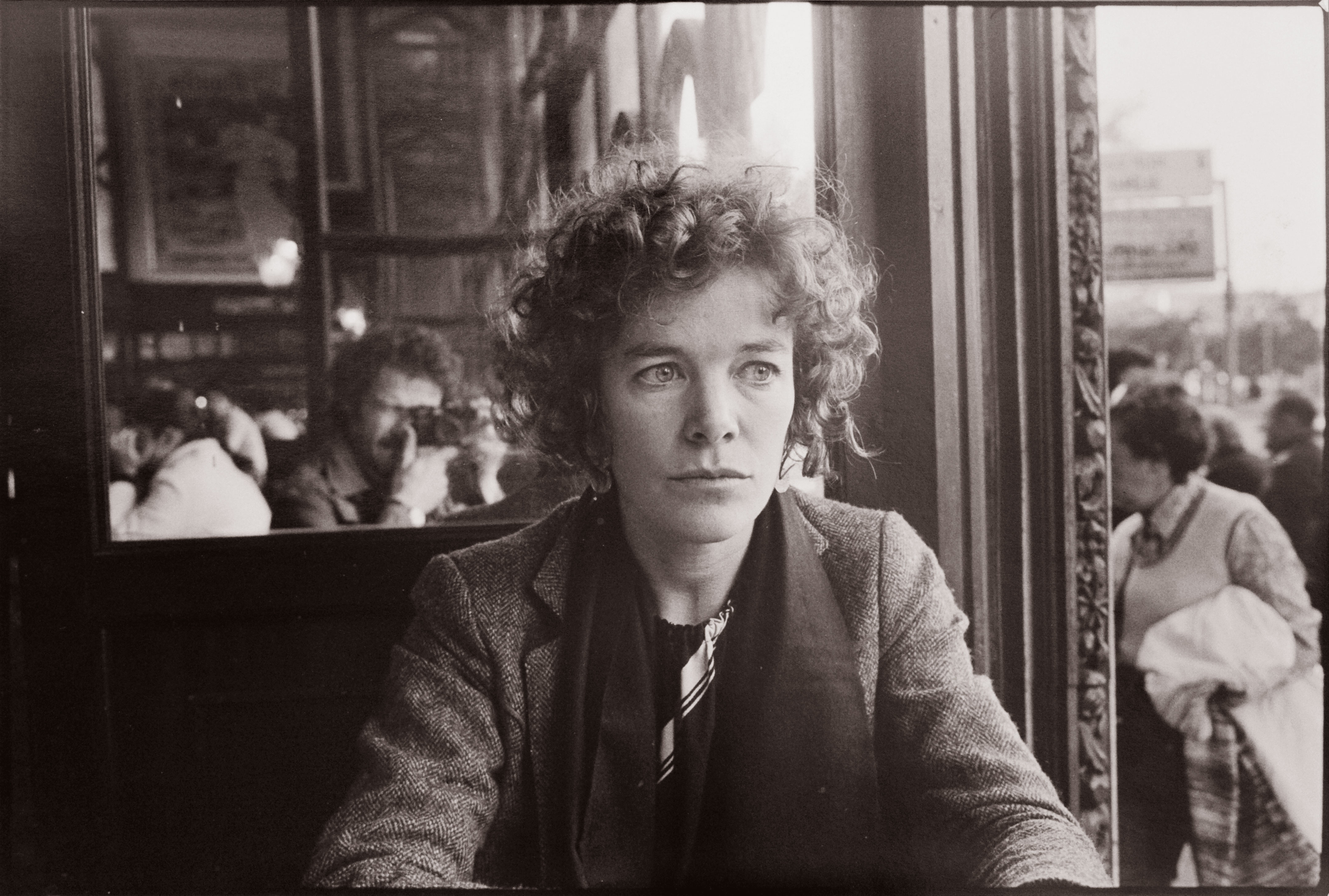
Alison Hawthorne Deming, a poet and essayist who focuses on issues of science and the environment, visited Smith this week to speak from her work. She had some wonderful comments during a Q&A on her writing.
I always ask environmental writers how they maintain hope in the face of the immense challenges we face: species extinction, climate change, overpopulation, water shortages, pollution, ocean acidification and coral bleaching, overfishing …. the list goes frighteningly on and on.
Hawthorne Deming called on the ideas of W.S. Merwin. “He said, when you’re in a life raft, that’s the time for your best behavior, not your worst behavior. We have to choose to have hope.” She went on to say that “when we’re experiencing loss and grief, we should work on that loss… What remains is the more precious to us.”
She spoke of that work on loss very beautifully as “an instruction to the moral imagination” to be given to us by ourselves.
I’m reminded of a song by The Flaming Lips titled “The Gash (Battle Hymn for the Wounded Mathematician).” It’s a brilliant anthem for embattled scientists everywhere:
Really why you have stopped?
Cuz I’ve noticed all the others,
Though they’re gashed, they’re still going,
And I feel like the real reason
That you’re quitting is admitting
That you’ve lost all the will
To battle on
Will the fight for our sanity
Be the fight of our lives?
When we’ve lost all the reasons
That we thought that we had …
So the battle that we’re in
Rages on, ’til the end
With explosions, wounds are open
Sights and smells, eyes and noses,
But the thought that went unspoken
Is understanding that we’re broken
Still the last volunteer battles on
Battles on ….
Battles on ….
Marvelous.
Hawthorne Deming also commented on her writing process. She started by mentioning that an essay she’d just read from “operates largely by digression – one of the essayist’s great friends.” Indeed.
She writes poems, she said, by “writing down snippets in a notebook and looking for some charge …. When I’m stuck, I go through a fairly manic process of pulling books off the shelf. I’m not going to plagiarize, but I’m going to steal a device. How do people end poems, anyway?” Fitting, for a poet whose work bubbles over with cleverly deployed references to literature and science.
“I won’t say poems arrive ready made,” she said, “but the impulse arrives. And when the impulse arrives, I try to put down whatever I’m doing and write it. That particular constellation of energy, passion, whatever it is, might not be there [later].”
She’s interested, she said, in developing what it means to be a woman in the 21st century, and all it entails – a theme that preoccupies me also.
Between essays and poems, “the poems are a little more mysterious,” she said. “I’m not always really sure where they come from or where they’re going.”
And so, following those little mysteries on their journey into the dark and lightness of the human soul, I’ll close this entry for tonight.
Insects gather
on the cabin window
so that all she can see
is a plague of gray moths.
She’s sick of the body’s
dumb song, the frenzy
of insects for light.
Why does a moth do that
if it’s nocturnal?
If it woke up in the daytime,
it could simply
have what it wants.
–Alison Hawthorne Deming
Always turn in the direction of the skid
Poet Dean Young visited Smith yesterday and said many beautiful and interesting things about poetry during a question-and-answer session on his work. Here are some of his replies, to the best ability of my hurrying pen to capture them.
Writing isn’t separate from my life … There’s always room for writing. It’s automatic. It’s like, do you set time for sleeping? Or breathing? Sleeping, it’s most like sleeping. I can always do that.
On being asked what makes a poem
Poetry has to assert itself as a poem in some way. And it does that in relation to the conventions of poetry. Convention’s not a bad word. I like convention. Poetry isn’t a dumping ground for interesting writing.
After saying that when writing, he never knows what he’s doing
Sometimes you’ll find something, and it’s like ‘Aha – a literary device.’ Then you’ll write four or five poems that are good, because for a little while you know how to write a poem. But the imagination isn’t going to tolerate that for long.
His writing pedagogy
A focus on describing what is there. I try not to judge a poem.
On how he writes his poetry
It’s not a Tinguely machine. Tinguely machines are those wonderful machines that throw themselves apart. But that’s not what I’m after. I aim for a poem that has a kind of emotional discovery system.
I try to respond to what’s already in the poem. And something emerges.
Form is created by exclusion.
I’m almost ready to say that poems have souls and that’s why we go to them. But I’m not quite ready to say that.
Breton talks about “putting your trust in the inexhaustible murmur.”
I never have an idea for a poem, never. I sit down to a blank sheet of paper with a blank mind.
Poems are always in the specifics.
On his process of revision
Writing and revision aren’t separate for me, they’re one process … With poems, I either have something in the first seven or eight run throughs, or I don’t. And if I don’t, I probably won’t.
I’m not too interested in poetry that tries to convince me that it has something by drops of sweat fallen from the brow. I’m interested in the bared nerve.
What matters is that whatever you do, you do it. You make a decision and you stick by it … Art as a decision-making process in a charged field. It doesn’t matter what the decision is. The important thing is that decisions are made.
A lot of times you just have to cross out the lines that stink. And then, oh good, there’s the poem. But a lot of times you have to cross out lines that are good, that are not guilty. They’re just not contributing.
On creating white space and tonal variation within poems to give the strong lines room to breathe
Don’t surround them with a lot of loud noise, because that will rob the intensity.
On whether he thinks about his audience as he writes (and answering “no”)
An artist is someone who’s always looking forward. The audience and the critic can only be behind her. They can only follow. The artist’s back is always to the audience. She can’t be turning back, and saying, ‘What do you think about that?’
On being asked, ‘But you’re a published poet – surely you must consider the needs of your audience?’
You have it backwards. You become a public poet because you have an audience. pause … It’s not my fault!
Whatever’s wrong with your work, it’s not what’s wrong. It’s what you’re trying to do with your poems. Never ‘fix’ your poems … You think it’s a mistake? It’s not a mistake. It’s a portal of discovery.
Often people laugh when I give a reading. And I never know what they’re going to laugh at.
It’s not a social communication to me, poetry. For one thing, it’s words on the page, not words out loud. And I really think of poems that way.
How do you know what to put in and take out?
Listen. Listen really hard. I think that your ear knows when things should be over. Duration for me is really important for form. For me, form has a lot to do with just duration …. The answer for me is never content. It’s style.
Sometimes the best endings are abrupt. Sometimes it’s not a good thing to tie things together.
I can tolerate confusion. I can tolerate noise in music. I can tolerate a lot of disjunction and not knowing what’s going on.
On being asked how he deals with discouragement and frustration during times when form doesn’t disclose itself; how does he not give up
It’s a sickness. It’s like malaria, writing malaria. And every time it happens, there’s no reason to think it will end … except that I’ve been through it before. I also believe you can’t wait out those periods, you have to write out those periods. Writing well is easy, it’s wonderful. But writing like crap is really really hard. But you have to do it. … I’ve been through a lot of these cycles. Now when I go through one of these periods, it’s easier, because I recognize the sickness.
On his aims in the poem “Even Funnier Looking Now”“
I was allowing as much of my experiences in life to pile up on each other. It was a real pinball effect … it has this including madness to it. I tell my students, as soon as you have a poem where you think everything can go in, you need to end it. [On the poem’s ending:] It’s elegaic, it ends as an upside-down love poem. [With the end sounds of “snow” and “box,” I wanted] to make a kind of cross stitch to bring the machine to a close … It had exhausted its capacity to keep my attention.
On the title of “Red Glove Thrown in a Rosebush”
[I was interested in the] juxtaposition of two types of red, and in a soft thing in a barbed environment. The title was the last thing thrown on the poem. What I’m interested in is a synaptic gap between the title and the poem … rather than a title that sticks to the poem like label glue. I think of titles as lines of poetry. It’s possible that this was a line of the poem that I couldn’t get settled in the poem and that I didn’t want to lose.
I often read the table of contents first, and if the table of contents is boring, I won’t read the book.
On how the red glove has great personal resonance for him: I believe the investment of a great deal of meaning into something that the reader doesn’t know invests a kind of emblematic energy in it.
On his idea that language is a genius
How meaning will come into a sentence, possess it even when it’s not intended, that’s genius to me.
The title of this post is what Dean Young wrote in my signed copy of “Bender.”
Adélia Prado and poetry’s core
Brazilian mystic poet Adélia Prado visited Smith College this week to share her work and thoughts with us. She gave a reading of her poetry – collaboratively with her translator, Smith professor Ellen Doré Watson – and two question and answer sessions about her work.
She spoke in Portuguese and I translated on the fly, so unfortunately I can’t offer exact quotes, but I’ve included close paraphrases of some of her words about poetry here.
Beautifully, Prado says she knows when a poem is finished when she sees that it’s larger than she is. For me, I love the way her idea contrasts to and builds on Yeats, who said a finished poem will “come shut with a click, like a closing box.” Yeats’ notion is a constraining one – Prado’s, a broadening; both, I think, are useful to poetry.
Prado also compared poetry to other arts, especially painting, which she called the art most similar to poetry. She said that the core of all the arts, is, in fact, poesia – the internal poetic center that drives the power of the artwork.
One student inquired whether this center of poetry is absolute, objective, or whether art is perceived subjectively and differently by different people. I found Adélia’s reply especially wise:
All poetry, all art, she said, has a center of poetry that is a real center – um centro verdadeiro – an absolute center. But “I”, the individual, as an individual, may or may not be able to perceive this center. People may not be able to enter a piece of art, she added, not necessarily because of a lack of sensitivity or sensibility but because of pride. This pride is an intellectual pride, she said – a desire to understand intellectually, rather than through feeling.
“Everything is the house of poetry,” she said: potatoes, washing clothes, mountains, rain, death. She reminded her audience that people tend to label her the poet of the quotidian, of daily life – even, she said, of the kitchen.
Finally, Prado, whose poetry is deeply influenced by her Catholicism, discussed the connection between faith and poetry, but left the idea wide open for people of all persuasions. Poetry, she said, is a fundamentally religious experience because it connects us to a center of significance and order that is larger than ourselves.
A poem by Prado, to close.
| O Poeta Ficou Cansado
Adélia Prado Pois não quero mais ser Teu arauto. |
The Poet Wearies
Adélia Prado I’ve had it with being Your herald. tr. Ellen Doré Watson |